
The Industrial Systems Most People Never Think About (Until Products Fail)
Explore the invisible industrial systems behind product quality, from thermal control and curing discipline to repeatability, maintenance, and the manufacturing processes that quietly determine whether products last.
5/1/20267 min read
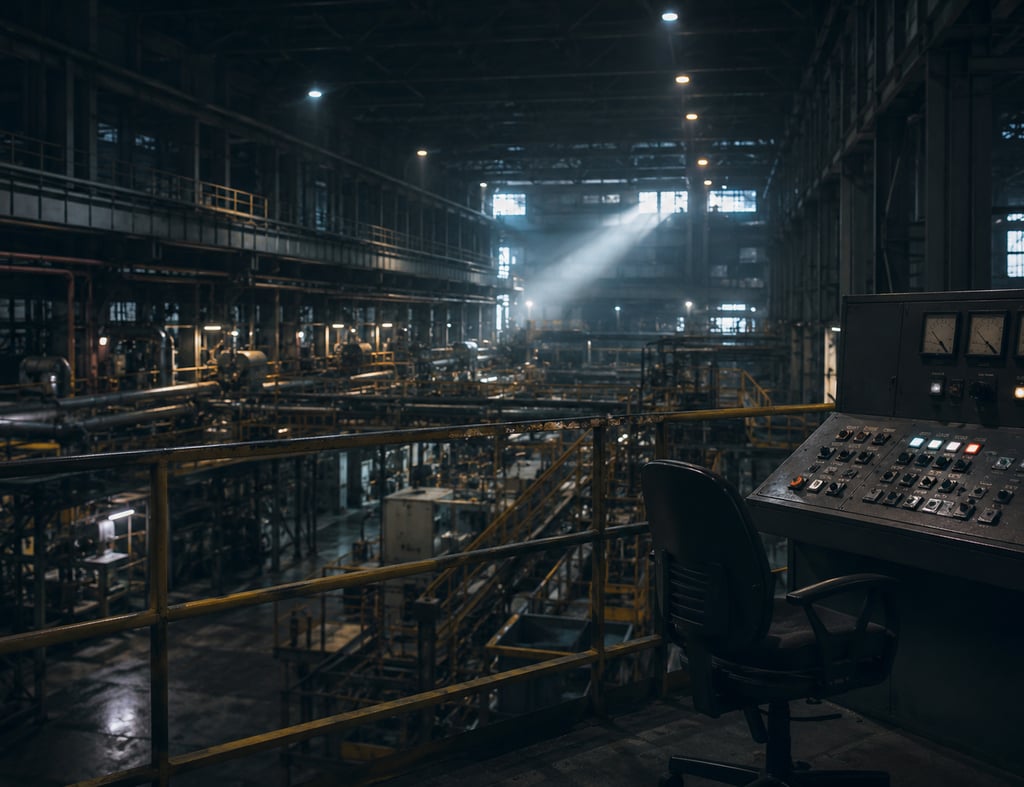
Failure
Most industrial systems become visible only when they stop doing their jobs.
That sounds obvious until you notice how much of modern life depends on this arrangement.
Nobody opens a package and thinks warmly about thermal consistency.
Nobody admires process repeatability over coffee.
Nobody casually says, “Remarkable corrosion resistance. Someone clearly respected disciplined environmental controls.”
People notice outcomes.
They notice when something feels solid.
They notice when something looks cheap.
They notice when a surface ages gracefully.
And they definitely notice when it doesn’t.
A finish chips too early.
A coating flakes.
A product starts looking tired long before it should.
Suddenly the invisible infrastructure behind manufacturing becomes strangely interesting.
This is not unique to factories.
Software works the same way.
Reliable backend systems become emotionally invisible because they preserve attention instead of demanding it. Databases are only dramatic when they fail. Infrastructure earns trust through silence.
Manufacturing does something similar.
Its best work disappears into expectation.
That may be the highest compliment systems ever receive.
Surfaces
We like to think of surfaces as superficial.
The word encourages it.
Surface implies cosmetic concern. Visual preference. Design vanity.
But surfaces often function as truth serum.
A product’s outer layer tells stories people may not consciously understand but still interpret instinctively.
Does this feel durable?
Cheap?
Trustworthy?
Temporary?
Poorly made?
Overengineered?
Surface judgment is not always irrational.
Sometimes it is pattern recognition.
The interesting thing is that the visible result often reflects invisible discipline.
Or invisible indiscipline.
A poor finish is not always merely aesthetic.
It may indicate rushed process.
Weak preparation.
Environmental inconsistency.
Improper curing.
Material mismatch.
Tolerance drift.
The outer layer can be process made visible.
Which makes surfaces less superficial than they first appear.
The outside is sometimes where internal seriousness leaks through.
Repetition
Innovation gets better storytelling.
Repetition builds better systems.
This is not a glamorous truth.
Modern business culture likes invention because invention feels cinematic. New ideas. New products. New disruption language written with suspicious confidence by people who have probably never watched a production line solve practical problems at scale.
But industrial quality often depends less on novelty than consistency.
Can the same acceptable result happen again?
And again?
And again?
Without quality drifting every time a variable changes?
Repeatability sounds boring because repetition sounds boring.
That may be a branding problem.
Because repeatability is one of civilization’s quiet miracles.
A single excellent outcome proves almost nothing.
A thousand acceptable outcomes suggest process maturity.
That is much less emotionally exciting.
Also vastly more useful.
Software teams eventually learn the same lesson.
Anyone can build something impressive once.
Sustaining predictable behavior under changing conditions is where systems reveal their character.
Speed
Modern organizations treat speed as moral virtue.
Faster response.
Faster delivery.
Faster scale.
Faster iteration.
Faster execution.
Speed gets confused with intelligence in ways that would be funny if they weren’t so culturally entrenched.
Industrial systems complicate this fantasy.
Some acceleration represents genuine improvement.
Some acceleration represents deferred failure wearing optimistic language.
The difference matters.
A process pushed beyond its stable assumptions may appear healthy for a while.
That is what makes speed seductive.
Immediate failure would at least be educational.
Delayed failure is more dangerous.
Metrics look fine.
Output continues.
Timelines hold.
Then six months later product quality becomes someone else’s problem.
This is not an argument against efficiency.
It is an argument against confusing throughput with wisdom.
Speed and quality are not natural enemies.
But they negotiate constantly.
And negotiation becomes less honest when deadlines start speaking louder than physics.
Heat
Heat sounds simple until it becomes process-critical.
Then it becomes theology.
Industrial thermal systems shape far more product outcomes than most people realize.
Materials respond differently under heat.
Coatings behave differently.
Adhesion changes.
Durability changes.
Failure thresholds shift.
Heat is not merely temperature.
It is distribution.
Timing.
Consistency.
Control.
One hot spot where there should be uniformity.
One rushed cycle.
One inconsistent environment.
And the final product may tell the story later.
Quietly.
Then expensively.
The interesting part is how familiar this feels if you have spent time around software systems.
Timing dependencies create fragile outcomes.
A service technically works until asynchronous behavior produces chaos.
A deployment technically succeeds until edge conditions expose assumptions nobody fully respected.
Thermal process discipline feels oddly similar.
Systems fail through invisible timing mistakes more often than dramatic explosions.
Explosions are easier to understand.
Drift is harder.
Precision
Precision is often misunderstood as complexity.
Sometimes it is.
More often it is discipline.
That is less romantic.
Precision usually looks like restraint.
Monitoring.
Calibration.
Verification.
Refusing emotionally convenient shortcuts.
Tolerating repetition without boredom becoming carelessness.
Industrial precision rarely looks cinematic.
It looks procedural.
The challenge is that procedure receives little admiration until it disappears.
People like breakthrough narratives.
Breakthroughs feel intelligent.
Procedure feels administrative.
But many catastrophic failures begin where disciplined procedure was treated as optional inconvenience.
Precision is less about technical spectacle than behavioral consistency.
Which makes it oddly human.
Drift
Sharp failure gets attention.
Gradual failure collects rationalizations.
This may be one of the most dangerous system behaviors.
A process shifts slightly.
The outcome still looks acceptable.
Then slightly worse.
Still manageable.
Then “good enough.”
Then normalized.
Then invisible.
Humans adapt aggressively.
That is one of our strengths.
Also one of our recurring problems.
Process drift thrives where people adjust expectations faster than systems are corrected.
The same thing happens in codebases.
Performance slowly degrades.
Temporary workarounds become architecture.
Technical debt becomes operational normality.
No dramatic catastrophe announces itself.
Just slow erosion.
Reality keeps receipts.
Industrial systems are less forgiving because the consequences eventually become physical.
A weak finish.
A shorter product lifespan.
A corrosion issue that should not exist yet.
Products become evidence.
Maintenance
Maintenance is modern civilization’s least glamorous dependency.
Which is unfortunate.
Because maintenance may be one of civilization’s most important competencies.
Systems degrade.
That is not pessimism.
That is thermodynamics wearing work boots.
Equipment wears.
Calibration shifts.
Environmental control changes.
Sensors age.
Assumptions expire.
Infrastructure accumulates entropy with remarkable consistency.
Maintenance exists because reality is indifferent to organizational optimism.
The problem is that maintenance competes badly against visible output.
“Everything continued functioning acceptably” is not compelling reporting language.
No applause.
No heroics.
No dramatic narrative arc.
Just quiet competence.
Yet enormous institutional trust lives there.
Reliable systems are often maintained into invisibility.
That should probably be respected more.
Humans
Industrial language sometimes implies human irrelevance.
Automation.
Control systems.
Precision manufacturing.
Repeatability.
The wording can sound antiseptic.
As though human judgment has been engineered out of the equation.
Reality is messier.
Humans remain everywhere.
Designing systems.
Interpreting anomalies.
Maintaining discipline.
Choosing whether shortcuts happen.
Responding to unexpected behavior.
Correcting drift.
Automation changes labor.
It rarely eliminates accountability.
The relationship between humans and industrial systems is usually not replacement.
It is translation.
Different responsibilities.
Same consequences.
A highly automated system still reflects human assumptions.
Which means human judgment remains upstream from outcomes.
That should be mildly humbling.
Coatings
Coatings suffer from branding problems.
They sound decorative.
Optional.
Cosmetic.
Aesthetic enhancement for products trying to impress.
Sometimes true.
Often incomplete.
Protective finishes influence durability.
Environmental resilience.
Chemical resistance.
Wear behavior.
Surface longevity.
Failure tolerance.
A finish can be infrastructure disguised as appearance.
That distinction matters because consumers often evaluate outcomes visually while remaining blind to process complexity.
A polished result may emerge from disciplined engineering.
Or rushed approximation.
Visual similarity does not guarantee process equivalence.
That is one reason trust becomes interesting.
Customers rarely audit process quality directly.
They experience consequences later.
Curing
Certain industrial processes are especially invisible because the terminology fails to generate emotional excitement.
Curing is one of them.
Nobody says “curing” and expects narrative drama.
Still.
Quiet industrial decisions around curing discipline influence real-world product outcomes constantly.
Application alone does not define finish quality.
Thermal consistency matters.
Timing matters.
Environmental stability matters.
Repeatable control matters.
The public-facing product reveals none of this directly.
Which is why technical decision-making upstream often feels abstract to outsiders.
Professionals evaluating finishing systems think differently because they have learned where invisible variables become visible failures. Resources like powder curing oven comparison guidance for industrial professionals exist precisely because process discipline affects outcomes long before end users encounter the finished product.
Consumers rarely see that layer.
But they absolutely experience it.
Trust
People believe they buy products based on features.
Sometimes true.
Often incomplete.
Trust influences far more purchasing behavior than people admit.
Will this last?
Will this behave predictably?
Will this age embarrassingly?
Will I regret this decision in six months?
Trust is not manufactured by marketing alone.
Marketing narrates trust.
Process often earns it.
That inversion matters.
Industrial discipline creates reliability long before branding departments describe it.
Consumers encounter the story.
Process created the reality.
Hopefully.
Abstraction
Technology culture often prefers abstraction.
Software feels elegant because it appears fluid.
Configurable.
Deployable.
Mutable.
Physical systems resist abstraction.
Materials obey physics rather than motivational language.
Thermal processes do not negotiate.
Tolerance boundaries remain unmoved by optimism.
There is something oddly comforting about this.
Industrial infrastructure reminds us that some truths remain stubbornly material.
Reality still expects competence.
Aesthetics
Beautiful products distort perception.
This is understandable.
A compelling surface creates confidence.
Humans interpret visual coherence as evidence of underlying seriousness.
Sometimes correctly.
Sometimes not.
Good aesthetics can emerge from disciplined engineering.
They can also emerge from strategic shortcuts designed to survive the warranty period.
The difference is difficult for ordinary buyers to detect immediately.
Which makes industrial trust partly epistemological.
How do we know what we think we know about product quality?
Often, we do not.
We infer.
Then wait for time to judge.
Time remains an unusually honest auditor.
Quiet Machinery
The machinery behind reliable outcomes is rarely emotionally legible.
That may be why industrial systems remain culturally underappreciated.
Factories do not market contemplation.
Production equipment rarely inspires poetic admiration.
Infrastructure feels practical.
Not aspirational.
And yet modern life depends on practical systems behaving competently at scale.
Products arrive because systems repeated themselves successfully.
Consistency remains one of modernity’s strangest miracles.
We normalize it immediately.
Naturally.
Meaning
There is something revealing about how little attention we give the systems that preserve ordinary trust.
Finished products feel personal.
Industrial processes feel distant.
But the distance is artificial.
Process discipline shapes lived experience.
A degraded finish becomes frustration in someone’s home.
Weak durability becomes replacement cost.
Hidden process decisions become ordinary inconvenience downstream.
Infrastructure is personal whether we notice it or not.
That may be the larger lesson.
The things that most reliably shape everyday life are often the systems nobody thinks about until they fail.
The Quiet Contract
Every finished product makes a silent promise.
Not necessarily explicit.
But implied.
It will behave acceptably.
It will not embarrass its makers immediately.
It will justify the assumptions embedded in its existence.
That promise depends on industrial systems most people never see.
Quiet systems.
Uncelebrated systems.
Sometimes deeply boring systems.
Which is exactly why they matter.
Boring competence scales.
Discipline accumulates.
Repeatability earns trust.
Failure simply introduces us to infrastructure we should have appreciated sooner.