
Why Storage Still Matters
A reflective essay on why storage remains the most overlooked yet essential part of modern technology—and how memory, persistence, and data infrastructure quietly shape everything we build.
9/29/20254 min read

Compute gets the glory.
Faster chips. Smarter models. Bigger numbers on benchmark charts. Every wave of technological progress seems to announce itself through acceleration. More speed. More power. More capability.
Compute performs.
It responds. It impresses. It gives demos something to show.
But all of that motion rests on something quieter.
Storage.
The places where things wait.
Attention
Compute feels alive.
You can see it working. Progress bars move. Fans spin. Dashboards light up. Latency drops and everyone cheers.
Storage does none of that.
It sits. It holds. It waits without asking for recognition.
Which makes it easy to overlook.
We talk about what systems can do. Rarely about what they can keep.
Background
Storage lives in the background by design.
If it called attention to itself, something would be wrong. You only notice storage when it fails. When files disappear. When backups don’t restore. When history collapses.
Its success is measured in silence.
And silence rarely trends.
Unsexy
Storage has never been glamorous.
Hard drives don’t demo well. Databases don’t inspire keynote applause. No one gathers around a diagram of replication protocols and feels excitement.
But without storage, compute has nothing to act on.
No memory. No continuity. No persistence.
Just motion without consequence.
Persistence
What storage offers is persistence.
The ability for something to remain when nothing is happening. To survive power cycles. To outlast sessions. To still be there tomorrow.
This sounds mundane.
It is foundational.
Without persistence, systems cannot learn. They cannot evolve. They cannot accumulate meaning. Every computation would start from zero.
Storage allows progress to stack.
Memory
Storage is memory made literal.
Not human memory, with its gaps, distortions, and reinterpretations. Machine memory. Exact. Unforgiving. Perfectly recallable.
Everything you’ve ever written digitally still exists somewhere because storage made that possible. Not compute.
Compute touched it once.
Storage kept it.
Quiet Labor
The labor of storage is invisible by intention.
Redundancy happens quietly. Backups run at night. Replication occurs across regions without announcement. Failover only becomes visible when it fails.
When storage works, nothing happens.
That’s the goal.
Fragility
When storage fails, everything else collapses.
Not slowly. Immediately.
Compute can degrade. Performance can dip. Features can be disabled.
Storage cannot degrade gracefully.
Data corruption is absolute. Loss is permanent. There is no partial recovery of something that no longer exists.
This fragility demands a different mindset.
Care
Storage forces care.
It prioritizes reliability over novelty. Boring decisions made well. Conservative designs that assume failure rather than deny it.
Innovation in storage rarely looks exciting.
It looks cautious.
And caution is a form of respect.
Economics
Storage scales differently than compute.
Compute is elastic. You spin it up when needed. You shut it down when demand fades. Costs rise and fall with usage.
Storage accumulates.
Once data exists, it tends to stay. Logs pile up. Archives expand. Backups multiply. Deleting feels riskier than keeping.
Storage costs compound quietly.
Time
Storage is time encoded as infrastructure.
It allows the past to persist into the present. It carries context forward. It gives systems continuity.
Compute lives in the now.
Storage spans years.
Infrastructure
Most people never see where storage lives.
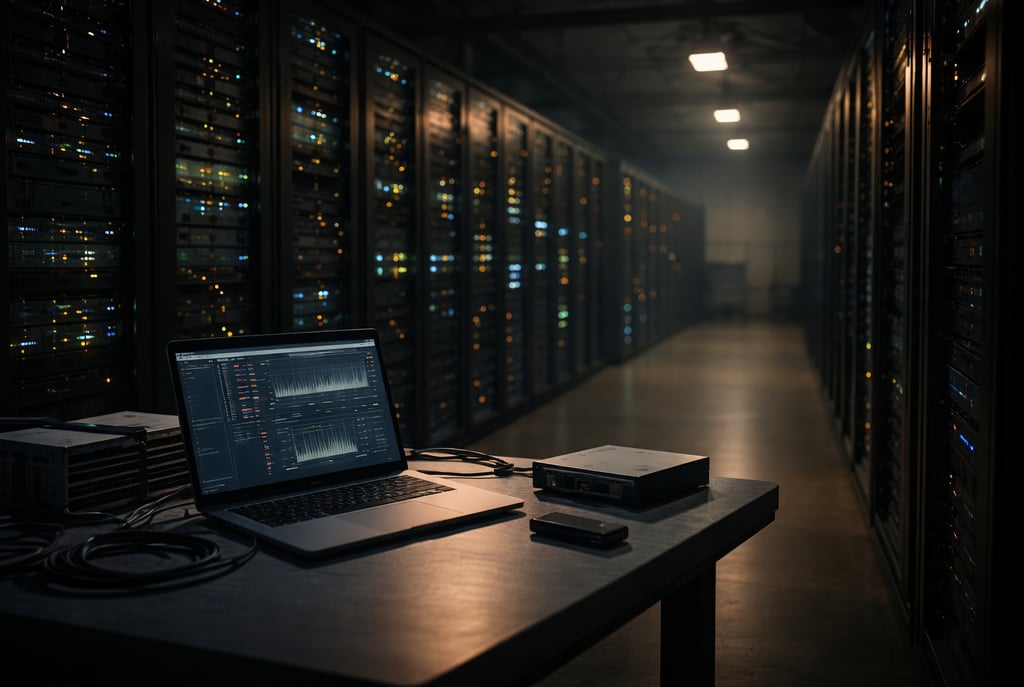
Data centers. Server racks. Climate-controlled rooms filled with humming fans and blinking lights. Facilities built not for performance, but for endurance.
They resemble cathedrals more than machines.
Not because they inspire awe.
Because they are built to last.
Endurance
Storage infrastructure is designed around endurance.
Redundant power. Redundant networking. Redundant cooling. Redundant disks.
Everything assumes failure will happen.
The question is not if something breaks.
It’s whether the system notices.
Redundancy
Storage is obsessed with redundancy.
Copies of copies. Data mirrored across continents. Failure treated as inevitable rather than exceptional.
This obsession is not inefficiency.
It’s humility.
An acknowledgment that hardware fails, software bugs, and humans make mistakes.
Storage plans for loss before it happens.
Trust
We trust storage more than we trust ourselves.
We forget. We misremember. We lose notebooks. We overwrite files.
Storage remembers exactly what it was told to remember.
This trust is practical.
It is also dangerous.
Accumulation
Because storage is cheap, we store everything.
Photos we will never revisit. Logs no one will read. Data collected “just in case.” Drafts that outlive their usefulness.
Accumulation feels harmless.
Until it isn’t.
Weight
Stored data has weight.
Not physical weight, but operational weight. Security obligations. Compliance requirements. Legal exposure. Ethical responsibility.
Every retained byte is a promise.
A promise to protect it.
Responsibility
Storage turns temporary actions into long-term commitments.
A casual screenshot becomes part of an archive. A throwaway message becomes a record. A test dataset becomes something that must be secured indefinitely.
Compute executes.
Storage remembers.
Power
Control over storage is power.
Who owns the data. Who can access it. Who can delete it. Who decides how long it lives.
These decisions shape systems more than algorithms ever will.
They determine who is remembered—and who is erased.
Forgetting
Humans evolved to forget.
Forgetting is not a flaw. It is how meaning is preserved. What fades makes room for reinterpretation. What remains gains significance.
Machines do not forget.
Storage preserves without judgment. It does not know what matters. It cannot decay meaningfully.
Forgetting must be engineered.
Design
Designing storage systems means designing memory.
What is easy to retrieve. What is buried. What is automatically deleted. What persists forever.
These decisions shape behavior.
They decide what histories survive.
Defaults
Most storage systems default to keeping.
Deletion is risky. Retention is safe. Or at least feels that way.
But defaults are values encoded quietly.
They shape what we remember by shaping what we allow to disappear.
Slowness
Storage introduces slowness.
Not in access speed, but in consequence. You cannot undo deletion casually. You cannot lose data without impact.
Storage encourages deliberation.
Every write is a decision.
Care, Revisited
Good storage systems are acts of care.
They anticipate failure. Protect against catastrophe. Preserve continuity across time and people.
They are built by those who understand that what they are holding matters to someone else.
Often, to many people.
Love Letter
Calling this a love letter may feel excessive.
But affection for infrastructure comes from dependence.
Storage holds our work. Our conversations. Our relationships. Our mistakes. Our unfinished thoughts.
It holds everything we are not ready to lose.
What We Celebrate
We celebrate intelligence.
We celebrate speed.
We celebrate breakthroughs.
We rarely celebrate endurance.
Storage is endurance.
What We Miss
We notice compute because it changes what we can do.
We ignore storage because it preserves what we already did.
But preservation is what makes progress cumulative.
Without storage, nothing compounds.
Quiet Future
As systems grow more complex, storage grows more important.
Not because it is novel.
Because everything depends on it.
The more we compute, the more we must remember.
The Point
Why does storage still matter?
Because progress without memory is amnesia.
Because compute without persistence is noise.
Because everything we build assumes something will remember when we move on.
Storage is not exciting.
It is essential.
And the future quietly rests on it.